Business Thinking
How Key Themes from 2020 will shape the workforce in 2021
2020 saw the world as we know it change almost overnight. A sudden shift in lifestyle and working behaviour, now called “the new normal”, was a key time for businesses to define how they would start to manage new working conditions, tackle sustainability and support social movements during this difficult time.
2020 saw the world as we know it change almost overnight. A sudden shift in lifestyle and working behaviour, now called “the new normal”, was a key time for businesses to define how they would start to manage new working conditions, tackle sustainability and support social movements during this difficult time.
With the onus now firmly on how organisations will tackle sustainability challenges, we wanted to use our platform to help businesses work towards a more sustainable future. Together with the University of Texas-Austin and the Boston Consulting Group we launched the first in a series of webinars to upskill organisations in the application of design thinking and sustainability, to help businesses create a more sustainable future.
We were lucky to be joined by some of the brightest thought leaders in the world. Kicking off the first webinar of 2020 was Doreen Lorenzo, Assistant Dean at the university of Texas at Austin, Jared Huke, Lecturer at the University of Texas at Austin, Orlando Mathias, Associate Director at the Boston Consulting Group in London and Maher Chebbo, Chair of the Governing Board at REEEP.
Our fantastic speakers took us through the journey of design thinking and how this innovative, creative approach can help us solve some of today’s most complex problems. Their methods showed us how businesses can adopt design thinking methods to develop creative ideas to build a sustainable business. For those that missed our first webinar of 2020, don't worry. You can find the full recording here.
We are happy to let you know that due to the popularity of the first course, we will deliver more tailored online courses in 2021 to upskill organisations in the application of design thinking and sustainability. Find out more here.
As part of our ongoing mission to create a sustainable future, we have partnered with CWEIC and REEEP to provide a platform for governments and businesses to share knowledge and support sustainable initiatives. The partnership will continue global efforts to transition from the use of fossil fuels and move towards clean and sustainable energy sources for communities across the Commonwealth. There will be a number of exciting projects and partnerships coming up this year, so make sure you follow us on Linkedin to see the latest news and developments.
Mental health
Mental health also became a huge underlying cause for concern during the pandemic, not just for those isolating but for front line workers and medical staff. Loneliness, job changes and stress brought on by the pandemic were all serious causes for concern. Together with BCG and FrontLine Connect, we conducted research into the mental health and wellbeing of key workers, such as NHS, Metropolitan Police and Royal Mail employees to find out more.
We found that the pandemic amplified and added to existing mental health, sleep disruption and wellbeing challenges. Our research also showed that there remains an unmet need and this is having a direct impact on reputation risk management, safety risk management and ultimately productivity.
In response, Mala Manku, Founder of Cavendish Group and the Association of Corporate Treasurers came together in November to speak to Tomas Campbell, Consultant Clinical Psychologist to discuss the impact of COVID-19 on mental health and the psychological impact it is having on people. He revealed the alarming psychological effect the virus has had on people in China, mental health charities and our ability to navigate our new world of work. To listen to his fantastic insights, you can find the full interview.
With the concerning new statistics in mind we felt that there was no time quite like 2020 to bring the cost of unmet wellbeing needs on your business and people to the front of the agenda. Together with support from the BCG, Frontline connect and Sam Cohen we launched FrontUp, a platform designed to create a bespoke solution and platform for your workforce.
The confidential platform would be an all-inclusive app that would provide a complete solution from an array of stress and mood monitoring to coping mechanisms, meditation, and access to referral for deeper counselling. The app will adopt a human-centred design approach to create high utility, behaviour changing services for employees that deliver measurable health benefits. We are happy to let you know that the beta version of the app is under rapid development and will be ready to launch in early 2021. Ria Patel, Co-founder of Frontup commented ‘For too long poor mental health and low mood have been siloed from both community and employer led responsibility. The covid pandemic has shone light on the action that needs to be taken, but the real work starts now. At FrontUp, we will continue our efforts to create meaningful change. We look forward to sharing this with you in the new year’.
What will 2021 look like?
2021 will be the time to start rebuilding and thinking about how we can all work together to build a brighter, happier and more sustainable world to live. At the cavendish group, we will be speaking with the lord mayors office to discuss building sustainable development goals and accelerate green energy technologies.
We aim to build a more diverse workforce within sustainability. We believe that diversity plays an important part in driving sustainability and should take centre stage as companies strive to bridge the gap between communities, influence supply chains and build partnerships. We want businesses to benefit from a range of diverse backgrounds, cultures, and upbringings and our goal is to help clients leverage diverse and talented workforce to support sustainable initiatives.
As a move to help private organisations shift towards the new climate change agenda, we will now offer an additional service to help you with your green talent hiring. The world of work has never been more in tune with the world outside and with talent in such high demand, we are now here to help you match industry specialists with your company to elevate its environmental work, messaging and targets.
We would like to say a special thanks to the Boston Consulting Group, the University of Texas in Austin for their continued support!
About Design Thinking, a fundamental tenet: Design matters!
The University of Texas at Austin, School of Design and Creative Technologies adheres to a fundamental tenet: Design matters! The same should be true for any organization or company, whether they offer physical and/or digital products, services or a collection of solutions for the many challenges and needs people have. Design is a creative, people-first approach to solving complex problems and has always been best suited to help solve human-centered problems that require dealing with different people, needs, circumstances, or environments.
The University of Texas at Austin, School of Design and Creative Technologies adheres to a fundamental tenet: Design matters! The same should be true for any organization or company, whether they offer physical and/or digital products, services or a collection of solutions for the many challenges and needs people have. Design is a creative, people-first approach to solving complex problems and has always been best suited to help solve human-centered problems that require dealing with different people, needs, circumstances, or environments.
In their 2018 report, The business value of Design, McKinsey & Company discusses how the potential for design-driven growth is enormous in both product and service-based sectors. Today more than ever, people and organizations are facing challenges that are putting conventional wisdom to the test. Leaders and their teams find themselves in need of developing and adopting creative, innovative solutions as the ultimate path to stay relevant while improving organizational effectiveness and impact. Similarly, organizations dedicated to lead in critical areas of society, like healthcare and education, are expected to put forward impactful solutions while addressing existing inequities.
“The Design Value Index (DVI), based on a portfolio of 16 publicly traded stocks from companies considered to be ‘design-centric’ contingent on a set of criteria that reflects best practices in design management, shows a 211% return over the S&P 500.”
One of the key areas for companies and organizations to tap into their innovative potential is to expand and upskill their cross-functional talent and making user-centric design everyone’s responsibility. Organizations advance this practice by nurturing and investing in high-impact learning experiences that disseminate a foundational understanding of design thinking among its cross-functional team members.
When it comes to crafting and adopting innovative solutions, leaders and managers struggle with the following counterintuitive uncertainties:
How could you make informed decisions on innovations for which traditional data sets does not exist yet?
What concrete evidence could inform your decision making for the feasibility and viability of innovative solutions?
How could you address the gap in understanding at the top of your organization when it comes to learning, understanding, and acting on what most frustrates and excites your customers?
In the article Why Design Thinking Works, published by HBR, they explain that “design thinking (as a social technology), has the potential to do for innovation exactly what TQM did for manufacturing: unleash people’s full creative energies, win their commitment, and radically improve processes.”
The structure of design thinking offers an iterative process that captures customers’ insights to inform the design criteria that inspire ideas for feasible solutions. The process also incorporate the use of rapid prototyping and testing to examine and probe assumptions about what’s critical for those solutions to successfully address people’s needs and further develop viable innovations.
“By involving customers and other stakeholders in the definition of the problem and the development of solutions, design thinking… supplies a structure to the innovation process… that helps innovators collaborate and agree on what is essential to the outcome at every phase.”
Cavendish Group partnered with The University of Texas at Austin School of Design and Creative Technologies (SDCTx) to deliver online workshops designed to upskill organisations in design thinking.
Benefits of women in the workplace
Women in business is a hot topic. Business leaders have grown interested in the benefits of hiring more women, while analysts have been keen to explore what women bring to the workplace.
What women bring to the workplace.
Women in business is a hot topic. Business leaders have grown interested in the benefits of hiring more women, while analysts have been keen to explore what women bring to the workplace.
Search online and you will find scores of results making generalisations regarding the perceived difference in traits and approaches between women and men. Words such as ‘empathy’, ‘intuition’ and ‘optimism’ have been peddled out. Some advise women to ‘act more like men’ to get ahead in the world of work. Such stereotypes help no one. Businesses should employ a diverse set of staff representative of the wider population because it makes good business sense.
Recent years have seen these issues come to the fore. In 2015, The Advocate Group reported that 43 per cent of large UK firms had no female representation at board level. That year, the UK ranked 14th in PWC’s Women in Work Index (it has since fallen to 15th, outpaced by improvements in job market conditions and closing gender pay gaps in other countries) and there was an 18 per cent difference between men’s and women’s median wages. These figures came on the back of targeted action to improve the statistics and demonstrated that the nation still had a long way to go.
Historic prejudice
Since 5 April 2017, British employers with more than 250 staff have been required to publish data on their gender pay gaps. The statistics that followed revealed gaping voids between the pay of men and women working for the same company: figures from Apple revealed that 71 per cent of its top-earning employees were men. The median pay gap at Apple UK was reported at 24 per cent. Ryanair’s gender gap was announced as 72 per cent, and at the time of reporting women made up just three per cent of the airline’s top-quarter earners. There was poor performance across the board, from JP Morgan (with a median gap of 54 per cent) to Telegraph Media Group (where women earn 35 per cent less than men on average) to Sports Direct (whose female staff are paid 6.3 per cent less on a median basis). BP, Tui and housebuilder Persimmon were among those to come under fire over their lack of women in the boardroom.
The reports paved the way for discussion, and the complexities of the situation ignited fierce debate: factors from government spending on family benefits, shared (or lack of) parental leave and occupational segregation have all been cited as contributors to an unfair employment environment for half the population. According to PwC, family-related policies, such as maternity leave and public expenditure on families, are meaningful factors in explaining the gender pay gap across the OECD.
Though the issues are multilayered, prospects for women in work appear to be gradually improving as a result of the data and subsequent conversations. In November last year, FTSE 350 companies were urged to appoint more women leaders and the government reported that the top 100 companies are on track to meet the target of women holding one third of board-level positions by 2020. All-male boards across the FTSE 350 fell from 152 in 2011 to five in 2018, but one in every two appointments to boards for FTSE 350 firms must be women in order to meet the target.
The figures were published in the Hampton-Alexander Review’s 2018 report. Sir Philip Hampton, chair of the review, said: “Over 100 FTSE 350 companies have already achieved – or exceeded – the 33 per cent target for women on boards [by the end of 2020], with a further 50 companies well on their way.
“I would like to thank the business leaders and stakeholders that have driven progress in recent years for their significant and collective contribution. At the same time, too many companies still have a long way to go.
“I am also delighted to see an increase in the number of women in the all-important senior leadership roles and companies working hard for some time now, delivering clear results.”
According to PwC, closing the pay gap could increase female earnings in OECD members by as much as $2 trillion in the long run. In the UK specifically, closing the pay gap could boost female earnings by £90 billion annually – equal to £6,300 per woman. To achieve this, in its Women in Work Index PwC recommends increasing spending on family benefits and childcare, encouraging more female entrepreneurship, and creating greater opportunities for higher-paid and higher-skilled roles.
But hiring more women should not be merely a tick box for businesses: there are myriad benefits tied to increasing female labour force participation.
What businesses stand to gain
Building diversity into teams strengthens team dynamics, bringing fresh perspectives. It can also bring profits. In 2014, an MIT study on workplace diversity found that when teams are split evenly between men and women, revenue can increase by as much as 41 per cent.
And a company’s stance on diversity can directly affect the kind of applicants it gets, too. Global research and advisory firm Gartner found that 80 per cent of American employees consider inclusion programmes an important factor when choosing an employer. Decision-making tracker app Cloverpop found that diverse teams make better business decisions 87 per cent of the time. It also discovered that boards with more women than average outperform companies with below the average by 36 per cent.
Letting go of bias clears the way for women to be better represented and promoted into the roles they are equipped to do – and at the same rate as men. Change needs to come from the top down, with boards and higher managerial levels appointing female leaders.
Women can also be agents of change. Facebook CEO Sheryl Sandberg has commented that women tend to only apply for jobs where they meet all the criteria, while men will apply despite possessing only some of the skills required.
Meanwhile, hiring managers can make job listings more attractive to women by using gender-neutral titles, limiting the requirements listed and sharing details of the company culture. Studies have proven that hiring bias is real, so to take things further managers should look at CVs and applications only when the names have been removed by someone uninvolved in the hiring process.
With promises of broad economic benefits, greater business performance and a valuable reputation as a business that values diversity, there can be no excuses for failing to increase women’s participation at all levels of the world of work.
The impact of longer working lives
The UK’s population is getting older – a fact that is affecting everything from employment policies and pension schemes to the ability of workers around the world to keep pace with innovation and structural changes.
Can an ageing population keep pace with shifting trends in the world of work, asks Cavendish Interim Management’s Mala Manku
The UK’s population is getting older – a fact that is affecting everything from employment policies and pension schemes to the ability of workers around the world to keep pace with innovation and structural changes.
Coupled with lower birth rates and a delay in having families, this demographic trend has far-reaching implications for the economy, presenting both opportunities and challenges to business and the world of work.
Employed for longer
A study earlier this year found that a third of the British workforce expects to retire after their 70th birthday, up from just 17 percent in 2010. This is partly a result of the rising retirement age, which will increase for both men and women to reach 66 by late 2020. Further changes are expected to increase retirement age to 67 between 2026 and 2028.
Among the opportunities are the contributions older people make to the economy, whether they’re wealthy and spending their final salary pensions, or still working and making tax and national insurance contributions.
For some of those still working, it’s a choice that can entail retiring from a decades-long career to pursue gainful employment in a field that they have a passion for. This brings about personal, social and economic benefits.
For others, it’s down to financial need. The Independent reports that between 2016 and 2018, the levels of both secured and unsecured debt held by the over-65s has increased from £70bn to around £85bn. Pension shortfalls, the launch of pensions freedoms and unforeseen expenses are all contributing factors. Crucially, a lack of choice when it comes to staying in employment often equals less job satisfaction, less engagement and more stress.
The 2008 economic crash has played a central role in this gap between the wealthy baby boomers and the would-be retirees who are living off credit. At the time, many older savers lost vast swathes of wealth. Indebtedness among the over-65s grew, and this trend has continued, with credit card and loan debt threatening the retirement years of one in five.
Meanwhile, younger people graduating around 2008 found the jobs market to be stagnant – which has contributed to the rise of today’s gig economy. Many millennials and Gen Z work in a way that is unrecognisable to their parents’ generation. Retirement seems a distant, perhaps unattainable, dream. Many work irregular hours and think nothing of dipping in and out of employment in between travelling or simply taking time out. And it is not impossible that this style of working will be carried into their senior years, with periods of work interspersed with regular time off.
Global power shifts
Despite the bad press the gig economy receives, it is arguably preparing the next generation for changes in global economics and the employment climate at home.
As power shifts from West to East, young startups and entrepreneurial individuals are taking advantage of fewer barriers to entry in global markets. But while we can prepare children for business operations and transactions with an Eastern focus, it’s significantly harder to retrain an ageing workforce.
It’s made harder still when the East is a much larger, more complex, geographic area than the ‘West’, encompassing countries as disparate as China and India. A successful global business environment requires understanding in terms of language, culture and corporate responsibility for all of these.
A 2014 study found that populations in advanced economies are pessimistic about the financial prospects for the next generation. People in the emerging economies of Asia tend to be far more optimistic than Europeans that their children will have better financial prospects than they have had. This is a reflection of the times.
Europe is still healing the wounds of the 2008 crash as it gets hit by new challenges – Brexit uncertainty being one of them.
To protect ourselves, the mentality of work has changed. But as our younger workers adapt, and perhaps thrive, in this new normal, will our older workforce be relegated to the menial jobs that are already losing out to technology? Unless we support broad, comprehensive retraining for this age cohort, we’re likely to dig even deeper divides.
STEM Scholars from India meet UK PM Theresa May
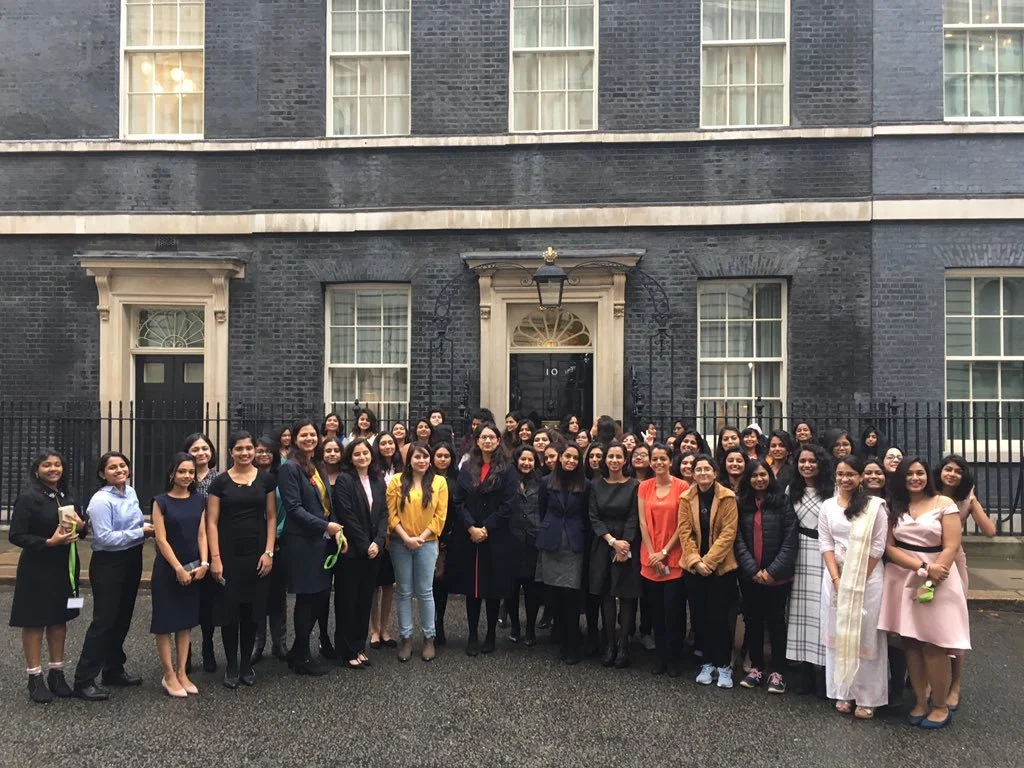
Prime Minister, Rt Hon Theresa May MP United Kingdom, met with British Council’s 70th Anniversary Women STEM scholars, demonstrating United Kingdom’s commitment to attracting the brightest Indian students to United Kingdom’s top universities.
Prime Minister, Rt Hon Theresa May MP United Kingdom, met with British Council’s 70th Anniversary Women STEM scholars, demonstrating United Kingdom’s commitment to attracting the brightest Indian students to United Kingdom’s top universities.
Talent acquisition in the evolving world of work
Technology has revolutionised the workplace, changing the way businesses operate and creating space for brand new roles. But bringing in the right talent remains a challenge for many as needs evolve alongside tech developments.
Technology has revolutionised the workplace, changing the way businesses operate and creating space for brand new roles. But bringing in the right talent remains a challenge for many as needs evolve alongside tech developments.
The world of work is changing. Jobs are becoming ‘smart’ as digitalisation, artificial intelligence (AI) and machine learning revolutionise business operations.
Driving this transformation is Industry 4.0 – a term coined to define the ongoing shift away from manual labour and traditional nine-to-five in-house roles towards work in a digital economy.
Billions of dollars are being pumped into tech developments that promise to elevate businesses and deliver innovative consumer solutions. McKinsey estimates that online firms and digital natives invested $20-30 billion into AI in 2016. According to the consultancy, investment in AI tripled between 2013 and 2016. Research from the World Economic Forum and management consultancy Accenture expects total technology investment to reach $2.4 trillion by 2020. Those companies in the top 20% of their sector by productivity will harvest the most gains.
Trending globally
And this trend isn’t exclusive to the likes of Silicon Valley – significant investment in digital is taking place around the world. The Chinese Government, for example, aims to establish China as the world’s leading AI innovation centre by 2030. Search almost any country with the words ‘tech hub’ and you’ll get multiple results for local digital start-ups.
For the business world, there is an urgent need to readjust, revise and rejuvenate. But technology investment alone cannot guarantee company success; increasingly, businesses are recognising the role of individuals and specialised talent in the modern world of work. As new industry and fresh business practices emerge, space is being created to identify, hire, nurture and support talent.
This goes against the tide of misinformation that suggests technology means the end of human work. Although some roles are becoming redundant, positions are appearing in brand new industries.
Online strategist, social media consultant, chief curator, and the ambiguous ‘entrepreneur’ are among a new breed of workers disrupting the jobs market. Contemporary niches are emerging which deliver broad benefits to organisations. As businesses reap the rewards, they grow more inclined to invest in new skills and technologies, as well as in people with relevant expertise.
Era of excellence
To this end, organisations are opening their arms to employees and contractors with specialist knowledge and competencies. An online expert will help a company boost its visibility online, and therefore its viability in a globally competitive market. A progressive strategist will assist a company in forward planning and boost the chances of long-term success. New roles have entered existence thanks to the start-up culture, while jobs with less prominence a few years ago have graduated to head office. In a world where ability is the driving force of any company, it makes good business sense to hire someone who excels at scouting talent. Dominic Barton, co-author of Talent Wins, advocates for chief human resources officers (HRO) who work on a level with an organisation’s CEO and CFO. Coining the term ‘G3’, Barton says he hopes to see more CEOs coming from the HR function and more line managers spending time in HR. Fostering a greater understanding of talent in the workplace can only bring good things.
Likewise, there is growing need for chief data officers, and workers trained to the highest standards on compliance, governance and other related areas. Such considerations were previously just a tick box, but with people sharing more of their data than ever before there is a stark need and escalating demand for data protection. A good example is the recent implementation of the GDPR (General Data Protection Regulation) – a European Union law on data protection and privacy intended to return control of personal data to the citizens it belongs to. It also addresses the export of personal data outside the EU and European Economic Area. Those who violate the GDPR face a fine of up to €20 million. Its implementation is a marker of heightened concern regarding data breaches – an issue that has risen in scope and prominence. And this is not incidental. It follows a series of data breaches suffered by global organisations – from Uber and JP Morgan Chase to the UK’s National Health Service – and even entire countries. Such breaches have brought data protection to the fore for all businesses.
Better business health
As companies seek to protect their data, and that of their employees, contractors and customers, they are also paying closer attention to protecting other areas that affect business performance.
Today, it is not unusual for companies to hire someone solely responsible for protecting the health – physical and mental – of their staff, and therefore the health of the company. Chief wellness officers and the like are tasked with ensuring balance within a company; work-life balance for employees, and a balance between activity and improvement of KPIs for the company.
There are also plenty of options to outsource wellness strategies and programmes. Organisations increasingly recognise that investment in employee wellbeing delivers benefits both financial and immaterial.
For businesses, Industry 4.0 brings with it opportunities to nurture and scale talent like never before. For individuals, there exists unprecedented scope to learn, train and reskill. Access to higher pay grades no longer rests on longevity of service, but instead on what you can bring to the table.
For future success
The tech revolution has blown the jobs market wide open. Yet there remains the need for rapid and complementary social innovation. Education, for example, is falling further behind developments in the workplace, leaving many school-leavers ill-equipped. Assisting older workers – those who haven’t grown up with technology and who therefore lack the digital intuitiveness of younger generations – to retrain and reskill should also be a priority.
The coming years will be defined by how we approach these challenges and whether we can align the tech revolution with much-needed change in the social sphere. If we achieve this, opportunities abound for business leaders and workers alike.
APEX 2018 Leadership Symposium
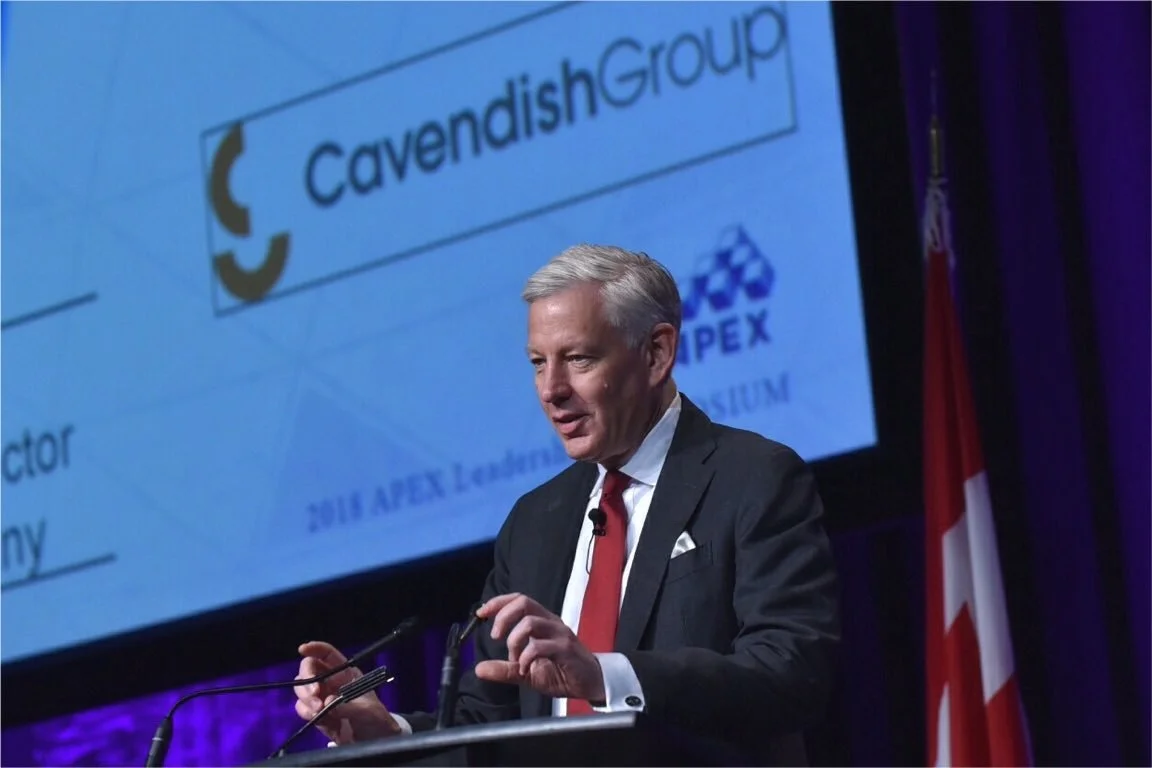
Cavendish Group are proud to sponsor Dominic Barton from McKinsey & Company at APEX 2018 Leadership Symposium.
Cavendish Group are proud to sponsor Dominic Barton from McKinsey & Company at APEX 2018 Leadership Symposium.